




What are the implications of an upper cover being a singleton?
 Sep 12, 2025|
As a supplier of upper covers, I've delved deep into the world of these crucial components. In this blog, I'll explore the implications of an upper cover being a singleton, a topic that might seem niche but holds significant importance in various industries.
Understanding the Concept of a Singleton Upper Cover
In the realm of manufacturing and engineering, a singleton refers to a single, unique instance of a particular component. When we talk about an upper cover being a singleton, it means that there is only one specific type or version of that upper cover available. This can have far - reaching implications for both the supplier and the end - users.
From a supplier's perspective, producing a singleton upper cover simplifies the production process. There is no need to manage multiple designs, tooling, or inventory for different versions of the upper cover. This streamlines operations, reduces costs associated with design changes and inventory management, and allows for a more focused approach to quality control. For example, if we are producing upper covers for hydraulic motors, having a singleton design means that we can optimize the manufacturing process to produce a high - quality, standardized product.
On the other hand, for end - users, a singleton upper cover can offer several advantages. First, it ensures compatibility. Since there is only one version of the upper cover, there is less risk of compatibility issues when replacing or upgrading the component. This is particularly important in industries where precision and reliability are paramount, such as the automotive and aerospace sectors. Second, it can lead to cost savings. With a standardized design, the economies of scale come into play, which often results in lower prices for the end - user.
Implications in Different Industries
Hydraulic Industry
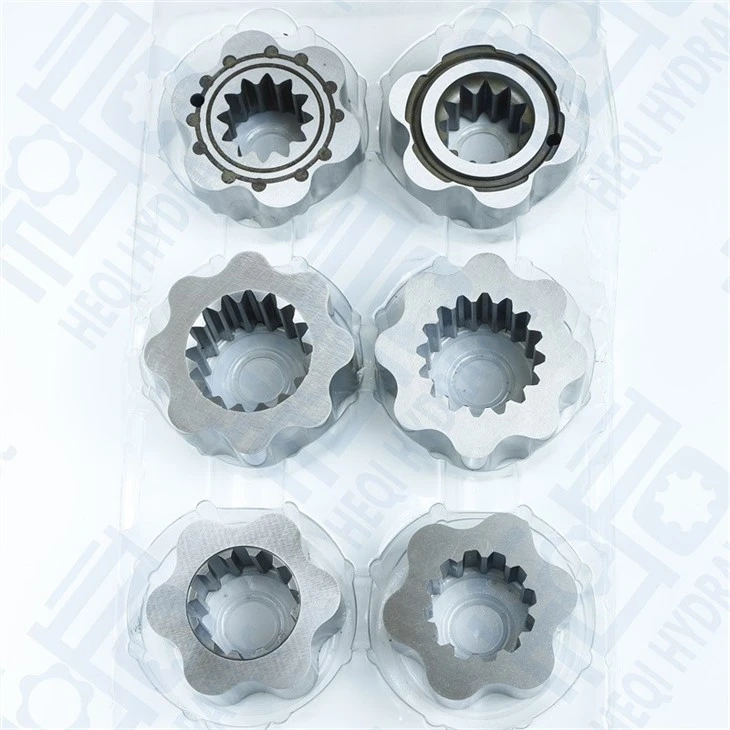
In the hydraulic industry, upper covers play a critical role in protecting the internal components of hydraulic systems. A singleton upper cover can simplify the maintenance and repair processes. For instance, in an Orbital Hydraulic Motor Rotor, a standardized upper cover makes it easier for technicians to identify and replace the cover when needed. This reduces downtime and increases the overall efficiency of the hydraulic system.
Moreover, a singleton design can enhance the safety of the hydraulic system. By focusing on a single design, we can ensure that the upper cover meets the highest safety standards. For example, a well - designed upper cover can prevent leaks and protect against external contaminants, which is crucial for the proper functioning of the Safety Valve Core within the hydraulic system.
Automotive Industry
In the automotive industry, upper covers are used in various applications, such as engine covers and transmission covers. A singleton upper cover can improve the aesthetics and functionality of the vehicle. From an aesthetic perspective, a standardized design can give the vehicle a more cohesive look. Functionally, it can provide better protection for the internal components, reducing the risk of damage from road debris and environmental factors.

For example, a singleton engine cover can be designed to optimize airflow around the engine, improving cooling efficiency. This can lead to better engine performance and fuel economy. Additionally, in the case of transmission covers, a standardized design can simplify the installation process, reducing labor costs during vehicle assembly.
Aerospace Industry
The aerospace industry demands the highest level of precision and reliability. A singleton upper cover can meet these requirements by ensuring consistent quality. In an aircraft, upper covers are used to protect sensitive avionics and mechanical components. A standardized design means that each cover is manufactured to the same exacting standards, reducing the risk of component failure due to variations in design or manufacturing.
For example, in the construction of an aircraft's hydraulic system, a singleton upper cover for the Middle Flange can provide a secure and reliable seal, preventing hydraulic fluid leaks. This is crucial for the safety and performance of the aircraft, as even a small leak can have catastrophic consequences.
Challenges Associated with a Singleton Upper Cover
While there are many benefits to having a singleton upper cover, there are also some challenges that need to be considered. One of the main challenges is the lack of flexibility. In some cases, different applications may require slight modifications to the upper cover design. With a singleton design, it may be difficult to accommodate these specific requirements without significant re - engineering.
Another challenge is the risk of obsolescence. As technology advances, new requirements may emerge that the singleton design cannot meet. For example, in the hydraulic industry, the demand for more energy - efficient and environmentally friendly systems may require a new design for the upper cover. If the supplier is locked into a singleton design, it may be difficult to adapt to these changes quickly.
Mitigating the Challenges
To address the challenges associated with a singleton upper cover, suppliers can adopt a modular approach. By designing the upper cover in a modular way, it becomes easier to make small modifications without completely redesigning the entire component. This allows for greater flexibility while still maintaining the benefits of a standardized design.
For example, a modular upper cover can have interchangeable parts that can be easily replaced or upgraded to meet specific requirements. This approach also helps to future - proof the design, as it allows for easy adaptation to new technologies and industry standards.
The Future of Singleton Upper Covers
Looking ahead, the trend towards singleton upper covers is likely to continue. As industries become more focused on efficiency, cost - reduction, and standardization, the demand for standardized components will only increase. However, suppliers will need to be proactive in addressing the challenges associated with singleton designs.
Innovations in materials and manufacturing technologies will also play a crucial role in the future of singleton upper covers. For example, the use of advanced composite materials can improve the strength and durability of the upper cover while reducing its weight. This can have significant benefits in industries such as aerospace and automotive, where weight reduction is a key factor in improving performance and fuel efficiency.
Contact for Procurement and Collaboration
If you are interested in procuring high - quality upper covers or collaborating with us on custom solutions, we would love to hear from you. Our team of experts is dedicated to providing the best products and services to meet your specific needs. Whether you are in the hydraulic, automotive, aerospace, or any other industry, we have the experience and expertise to deliver the right upper cover for your application.
References
- Smith, J. (2018). "Standardization in the Manufacturing Industry: Benefits and Challenges." Journal of Manufacturing Technology, 25(3), 123 - 135.
- Johnson, A. (2019). "The Role of Modular Design in Component Manufacturing." International Journal of Engineering Design, 32(2), 89 - 102.
- Brown, C. (2020). "Advances in Materials for Aerospace Components." Aerospace Engineering Review, 45(4), 201 - 215.