




What are the shock resistance requirements for a fixed rotor pair?
 Dec 02, 2025|
In the realm of hydraulic systems, fixed rotor pairs play a pivotal role. As a dedicated supplier of fixed rotor pairs, I've seen firsthand the critical importance of shock resistance in these components. In this blog, I'll delve into the shock resistance requirements for a fixed rotor pair, explaining why they matter and how we ensure our products meet these stringent demands.
Understanding the Role of Fixed Rotor Pairs
Fixed rotor pairs are essential components in hydraulic motors and steering gear systems. They work in tandem to convert hydraulic energy into mechanical energy, enabling smooth and efficient operation of various machinery. For instance, in hydraulic motors, the fixed rotor pair helps in generating torque, which is then used to drive the equipment. In steering gear systems, it ensures precise control and maneuverability.
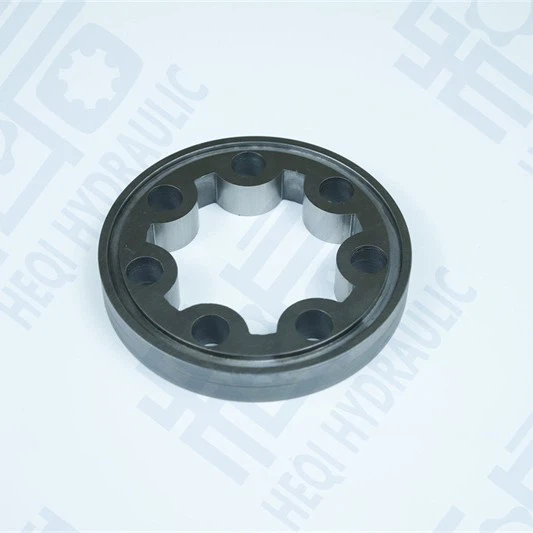
The Omm Gerotor Set is a prime example of a fixed rotor pair that is widely used in hydraulic motors. Its unique design allows for high - efficiency power transmission, making it a popular choice in the industry. Similarly, the Rotor And Stator Set For Steering Gear is specifically engineered to provide accurate steering control, which is crucial for the safety and performance of vehicles and heavy machinery.
Why Shock Resistance is Crucial
In real - world applications, fixed rotor pairs are often exposed to various types of shocks. These shocks can be caused by sudden changes in load, pressure spikes, or external impacts. Without adequate shock resistance, the fixed rotor pair can suffer from premature wear, damage, or even complete failure.
For example, in construction equipment, the hydraulic system may experience sudden jolts when the machine hits an obstacle or when the load is abruptly changed. If the fixed rotor pair cannot withstand these shocks, it can lead to internal damage, such as cracked rotors or worn - out stators. This not only affects the performance of the equipment but also increases maintenance costs and downtime.
In addition, shock resistance is also important for the longevity of the fixed rotor pair. A component that can withstand shocks is less likely to develop fatigue cracks or other forms of damage over time. This means that it can operate reliably for a longer period, reducing the need for frequent replacements and ensuring the overall efficiency of the hydraulic system.
Shock Resistance Requirements
Material Selection
The choice of materials is one of the most critical factors in determining the shock resistance of a fixed rotor pair. High - strength materials with good toughness are typically preferred. For example, some fixed rotor pairs are made from alloy steels that have been heat - treated to enhance their mechanical properties. These materials can absorb and dissipate the energy from shocks, reducing the risk of damage.
We carefully select the materials for our fixed rotor pairs, taking into account factors such as hardness, toughness, and corrosion resistance. By using high - quality materials, we ensure that our products can withstand the harsh conditions of real - world applications.
Design Considerations
The design of the fixed rotor pair also plays a significant role in its shock resistance. A well - designed fixed rotor pair should have a balanced structure that can distribute the shock load evenly. For example, the shape and size of the rotors and stators can be optimized to reduce stress concentrations.
In addition, the clearances between the rotors and stators need to be carefully controlled. Too large a clearance can lead to excessive vibration and impact forces, while too small a clearance can cause overheating and wear. Our engineers use advanced design tools and simulation techniques to optimize the design of our fixed rotor pairs, ensuring that they meet the highest shock resistance requirements.
Manufacturing Processes
Precision manufacturing processes are essential for achieving high shock resistance. During the manufacturing process, strict quality control measures are implemented to ensure that each component meets the specified tolerances. For example, the surface finish of the rotors and stators can affect their shock resistance. A smooth surface finish can reduce friction and wear, while also improving the ability of the component to withstand shocks.
We use state - of - the - art manufacturing equipment and techniques to produce our fixed rotor pairs. Our manufacturing facilities are equipped with CNC machining centers, grinding machines, and other precision equipment, which allows us to produce components with high accuracy and consistency.
Our Commitment to Meeting Shock Resistance Requirements
As a supplier of fixed rotor pairs, we are committed to providing our customers with products that meet the highest shock resistance requirements. We have a team of experienced engineers and technicians who are dedicated to research and development. They continuously work on improving the materials, design, and manufacturing processes of our fixed rotor pairs to ensure that they can withstand the most demanding applications.
We also conduct rigorous testing on our products to ensure their shock resistance. Our testing facilities are equipped with advanced testing equipment, such as hydraulic shock testers and vibration testing machines. These tests simulate real - world conditions and allow us to evaluate the performance of our fixed rotor pairs under different shock loads.
The Impact of Shock Resistance on System Performance
When a fixed rotor pair has excellent shock resistance, it has a positive impact on the overall performance of the hydraulic system. A shock - resistant fixed rotor pair can ensure smooth and stable operation of the hydraulic motor or steering gear. This means that the equipment can operate more efficiently, with less vibration and noise.
For example, in a hydraulic steering system, a shock - resistant fixed rotor pair can provide more precise steering control. This is especially important in applications where high - precision maneuvering is required, such as in marine vessels or aircraft.

Related Components and Their Role in Shock Resistance
The shock resistance of a fixed rotor pair is also influenced by other related components in the hydraulic system. For example, the Middle Flange plays an important role in supporting the fixed rotor pair and absorbing some of the shock energy. A well - designed middle flange can help to distribute the shock load evenly and protect the fixed rotor pair from excessive stress.
Conclusion
In conclusion, the shock resistance requirements for a fixed rotor pair are of utmost importance in ensuring the reliable operation of hydraulic systems. By carefully selecting materials, optimizing the design, and using precision manufacturing processes, we can produce fixed rotor pairs that can withstand the harsh conditions of real - world applications.
If you are in the market for high - quality fixed rotor pairs that meet strict shock resistance requirements, we invite you to contact us for procurement and further discussions. Our team of experts is ready to assist you in finding the right solutions for your specific needs.
References
- Machinery's Handbook, 31st Edition, Industrial Press Inc.
- Hydraulic System Design and Analysis, John F. Watson, McGraw - Hill Education.
- Advanced Materials for Engineering Applications, David A. Askeland, Prentice Hall.