




What are the differences between upper cover and upper semi - lattice?
 Jan 09, 2026|
 Hey there! I'm an upper cover supplier, and today I'm gonna talk about the differences between upper cover and upper semi - lattice. It might sound a bit technical at first, but I'll do my best to break it down in a way that's easy to understand.
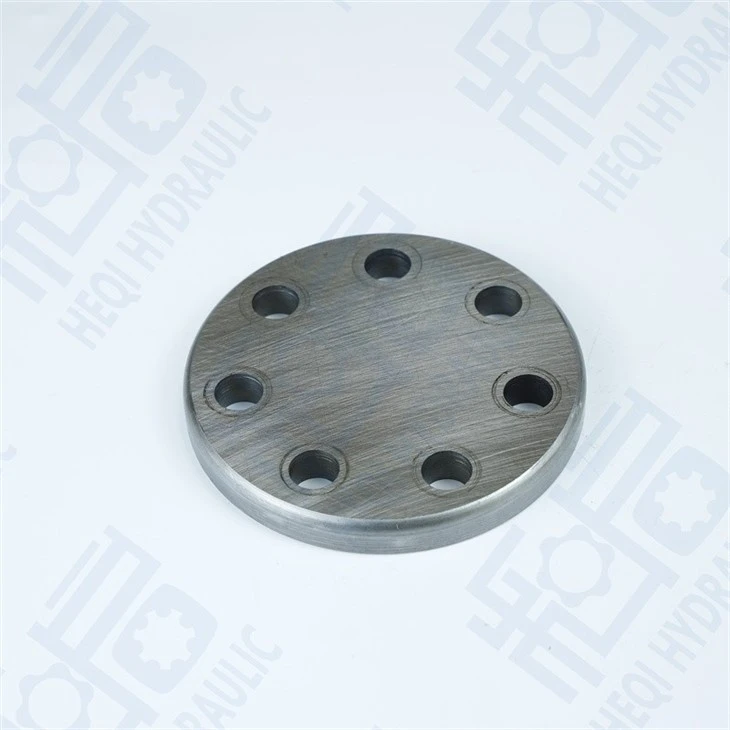
Let's start with the upper cover. As a supplier, I deal with upper covers on a daily basis. An upper cover is basically a component that's used to protect and enclose the top part of a device or a system. It serves a very practical purpose. For example, in a hydraulic motor, the upper cover shields the internal components from dust, dirt, and other external elements that could potentially damage the motor. It also helps in maintaining the integrity of the system by preventing leaks and ensuring that the internal parts work in a controlled environment.
One of the key features of an upper cover is its physical shape and design. It's usually custom - made to fit the specific device it's meant for. The shape has to be precise so that it can be properly attached to the rest of the structure. The material used for upper covers can vary widely. Some are made of high - strength plastics, which are lightweight and corrosion - resistant. Others are made of metal, like steel or aluminum, for applications where more durability and strength are required.
Now, let's move on to the upper semi - lattice. An upper semi - lattice is a concept mainly used in mathematical lattice theory. In a lattice, which is a partially ordered set, an upper semi - lattice is defined by the fact that every pair of elements in the set has a least upper bound. It's more of a theoretical and abstract idea compared to the physical upper cover.
The main difference in terms of nature is that the upper cover is a tangible, physical object, while the upper semi - lattice is a mathematical construct. You can hold an upper cover in your hand, but you can't do that with an upper semi - lattice. The upper semi - lattice is used in various fields such as computer science, electrical engineering, and discrete mathematics. In computer science, for example, it can be used to model the flow of data or the hierarchy of processes.
In terms of application, the upper cover is used in a wide range of industries. In the automotive industry, upper covers are used in engines to protect the valve train and other important components. In manufacturing, they can be found on machinery to prevent debris from getting into the moving parts. On the other hand, the upper semi - lattice is used more in theoretical research and in the development of algorithms and models.
Let's take a look at some related products. If you're in the hydraulic motor parts business, you might be interested in products like the Hydraulic Drive Shaft. It's an important part of the hydraulic system that transfers power from the motor to other components. Another product is the Stator - rotor Pair For Orbit Motor. This pair is crucial for the proper functioning of an orbit motor. And the Orbital Hydraulic Motor Rotor is also a key component that helps in the rotation of the motor.
As an upper cover supplier, I understand the importance of quality and reliability. I work hard to ensure that the upper covers I provide are of the highest standard. I use advanced manufacturing techniques and high - quality materials to make sure that the covers can withstand the harsh conditions they might be exposed to.
If you're in need of upper covers for your products, whether it's for a small device or a large - scale industrial machine, I'd love to have a chat with you. I can offer you a wide range of options in terms of materials, sizes, and designs. We can discuss your specific requirements and come up with a solution that fits your needs perfectly. So, don't hesitate to reach out and start a discussion about your procurement needs.
References

- "Lattice Theory" by Garrett Birkhoff
- "Introduction to Hydraulic Systems" by Paul E. Pfeiffer
- "Computer Science and Discrete Mathematics" by Rosen, Kenneth H.