




Are omtw walking motors suitable for high - speed applications?
 Apr 29, 2026|
 Are OMTW Walking Motors Suitable for High - Speed Applications?
In the realm of hydraulic motors, the OMTW walking motor has gained significant attention. As a supplier of OMTW walking motors, I am often asked whether these motors are suitable for high - speed applications. To answer this question comprehensively, we need to delve into the characteristics of OMTW walking motors, the requirements of high - speed applications, and the potential challenges and benefits.
Characteristics of OMTW Walking Motors
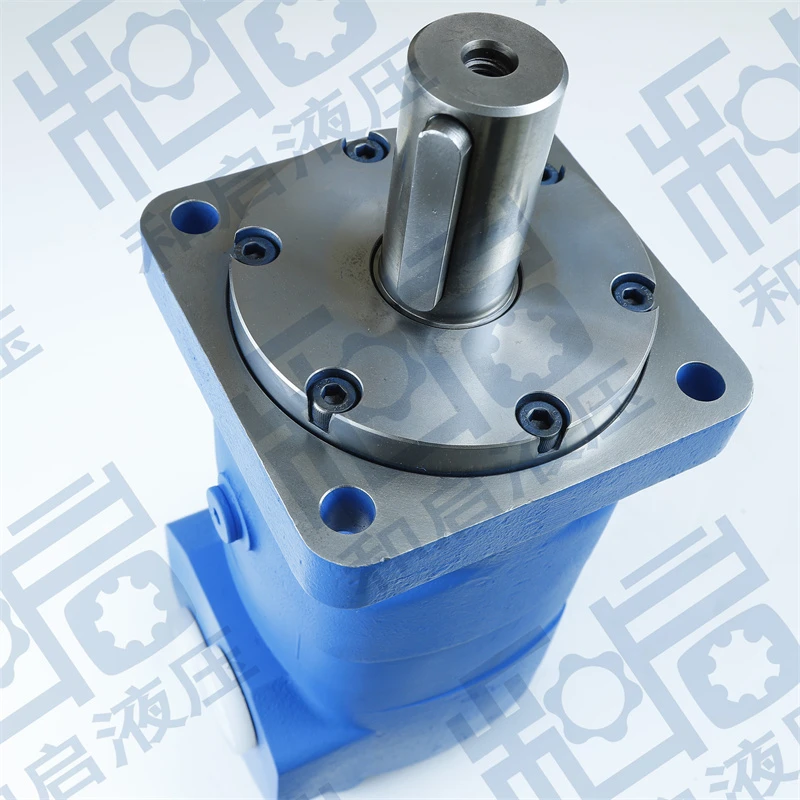
OMTW walking motors are a type of orbital hydraulic motor. They are designed with a unique internal structure that allows for efficient power transmission. The key components typically include a gerotor set, which consists of an inner rotor and an outer rotor. The interaction between these two rotors creates a series of expanding and contracting chambers, which are filled and emptied with hydraulic fluid to generate rotational motion.
One of the notable features of OMTW walking motors is their high torque output. They are capable of delivering substantial torque even at low speeds, making them ideal for applications where heavy loads need to be moved or where high starting torque is required. This is due to the large displacement volume of the gerotor set, which allows for a large amount of hydraulic fluid to be displaced per revolution, resulting in high torque.
Another characteristic is their compact design. OMTW walking motors are relatively small in size compared to other types of hydraulic motors with similar torque capabilities. This makes them suitable for applications where space is limited, such as in mobile equipment like mini - excavators or small forklifts.
Requirements of High - Speed Applications
High - speed applications typically have different requirements compared to low - speed, high - torque applications. In high - speed applications, the motor needs to be able to rotate at a high rate without sacrificing efficiency or reliability. The following are some key requirements:
High - speed Rotation: The most obvious requirement is the ability to operate at high rotational speeds. This means that the motor's internal components need to be able to withstand the high centrifugal forces and stresses associated with high - speed rotation.
Efficiency: At high speeds, energy efficiency becomes crucial. An inefficient motor can lead to increased power consumption, higher operating temperatures, and reduced overall system performance. Therefore, the motor should have a high volumetric and mechanical efficiency at high - speed operation.
Reliability: High - speed operation can put additional stress on the motor's components. The motor needs to be designed and built to withstand these stresses over an extended period of time. This includes having high - quality materials, proper lubrication, and effective cooling mechanisms.
Suitability of OMTW Walking Motors for High - Speed Applications
Advantages
Variable Speed Capability: OMTW walking motors can offer a certain degree of variable speed operation. By adjusting the flow rate of the hydraulic fluid, the motor's rotational speed can be controlled. This variable speed feature allows the motor to adapt to different operating conditions, including high - speed applications.
Good Torque - to - Inertia Ratio: The high torque output of OMTW walking motors relative to their inertia can be beneficial in high - speed applications. A good torque - to - inertia ratio means that the motor can accelerate and decelerate quickly, which is important for applications that require rapid changes in speed.

Challenges
Internal Friction and Wear: At high speeds, the internal friction between the moving parts of the gerotor set can increase significantly. This can lead to increased wear and tear on the components, reducing the motor's lifespan. To mitigate this, proper lubrication and high - quality materials are essential.
Centrifugal Forces: The high centrifugal forces generated at high speeds can cause problems such as leakage or deformation of the motor's internal seals and components. Designers need to take these forces into account during the motor's development to ensure its reliability at high - speed operation.
Comparing with Other Hydraulic Motors for High - Speed Applications
There are other types of hydraulic motors available for high - speed applications, such as the OMVS Motor. The OMVS motor is also an orbital hydraulic motor but may have different design characteristics optimized for high - speed operation. It may have a different gerotor geometry or a more advanced sealing system to reduce leakage at high speeds.
Another option is the Danfoss OMT Hydraulic Motor Replacement. This motor is designed to replace the Danfoss OMT motor and may have improved performance in high - speed scenarios, with better efficiency and reliability features.
The Swing Orbit Motor is also a competitor in the high - speed hydraulic motor market. It is specifically designed for applications where high - speed rotation and precise control are required, such as in the swing function of excavators.
Case Studies and Applications
Let's consider some practical applications to further evaluate the suitability of OMTW walking motors for high - speed applications. In some small - scale agricultural machinery, such as self - propelled mowers, high - speed operation is needed to cover large areas efficiently. The compact design and variable speed capability of OMTW walking motors make them a potential candidate for such applications. However, the high - speed operation may increase the wear on the motor, so proper maintenance and monitoring are required.
In the field of industrial automation, conveyor belts may require high - speed rotation to move materials quickly. OMTW walking motors can be used if their torque and speed characteristics match the requirements of the conveyor system. However, the motor's ability to maintain efficiency and reliability at high speeds needs to be carefully evaluated.
Guidance for High - Speed Applications
If you are considering using OMTW walking motors for high - speed applications, here are some guidelines to follow:
Proper Sizing: Ensure that the motor is properly sized for the application. Calculate the required torque and speed based on the load and operating conditions. An undersized motor may overheat or fail at high speeds, while an oversized motor can be inefficient and costly.
Lubrication and Cooling: Implement an effective lubrication and cooling system. High - speed operation can generate a lot of heat, and proper lubrication can reduce friction and wear. Cooling methods such as oil - cooled systems can help maintain the motor's temperature within a safe range.
Maintenance and Monitoring: Establish a regular maintenance schedule. Check the motor's internal components for wear, monitor the temperature and pressure, and replace any worn parts in a timely manner. By doing so, you can extend the motor's lifespan and ensure its reliable operation at high speeds.
Conclusion
In conclusion, OMTW walking motors can be suitable for high - speed applications under certain conditions. While they have advantages such as variable speed capability and a good torque - to - inertia ratio, they also face challenges such as increased internal friction and wear at high speeds. By carefully considering the application requirements, comparing with other hydraulic motors, and following the guidance for high - speed operation, OMTW walking motors can be a viable option for high - speed applications.
If you are interested in exploring the potential of OMTW walking motors for your high - speed applications, I invite you to contact us for further discussion and procurement. We are committed to providing high - quality OMTW walking motors and professional technical support.
References
- "Hydraulic Motor Handbook", published by an industry - leading hydraulic equipment association.
- Technical reports from OMTW walking motor manufacturers on motor performance and application.
- Case studies and research papers on high - speed hydraulic motor applications.